HOME BOOK
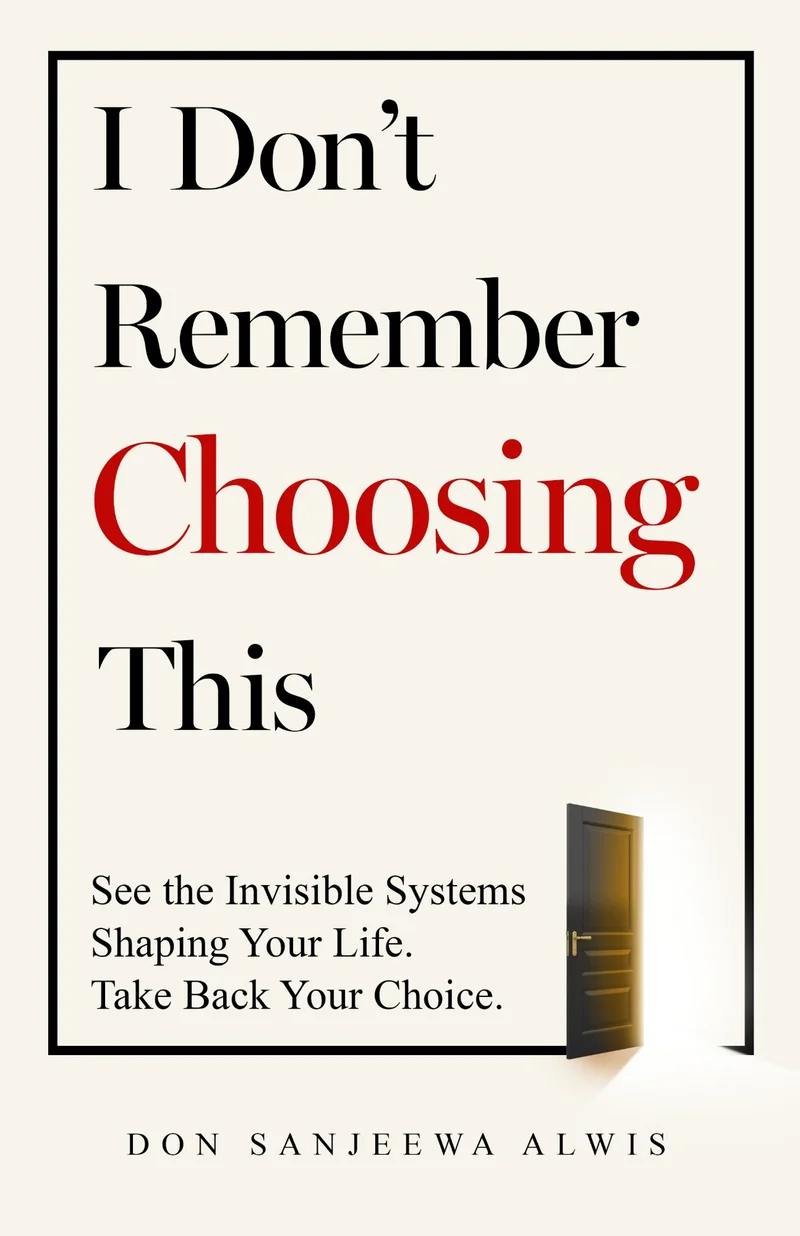
I Don’t Remember Choosing This
See the Invisible Systems Shaping Your Life. Take Back Your Choice.
By Don Sanjeewa Alwis · Ovinway Press
I Don’t Remember Choosing This by Don Sanjeewa Alwis explores hidden systems, automatic responses, and practical ways to reclaim choice in work and everyday life.
Available to preorder on Kindle
Available to preorder on Kindle. Releases January 7, 2027.
Kindle ebook · US$4.99 on Amazon.com. Local prices may vary.
YOUR NEXT CHAPTER
Get launch updates
Get an email when I Don’t Remember Choosing This is released on January 7, 2027, plus occasional news about the book.
After signing up, look for “Confirmation email” from Don Sanjeewa Alwis and click “Confirm your email.” Check Spam or Promotions if needed.
Form not loading? Open the signup form.
ADVANCE READER TEAM
Become an advance reader
Join my reader team to hear about advance copies planned for November. Reviews are voluntary.
Opens Booksprout, which manages the team and advance copies.
For the life that looks fine.
And feels less like yours.
At work, in families, across cultures, and online, we learn what earns approval. This book explores how those rewards meet old automatic responses—and how noticing both can create room for a different move.
This personal development book explores people-pleasing, family expectations and the feeling of being successful but unfulfilled. Through everyday stories and reflective tools, the journey moves from seeing the Frame to catching the Default to making a deliberate choice.
THREE PARTS · TEN CHAPTERS
See the Frame
Notice what your work, relationships, and attention are teaching you to value.
- The Frame Is Not Destiny
- The Frame Is the Game
- The Feed Is Not Neutral
Catch the Default
Recognize the response that arrives before you have time to choose.
- Your Default Is Faster Than Your Philosophy
- The Identity Trap
- The Parts of You That Went Quiet
Make the Move
Pause, test another option, and build a small system you can shape.
- The Pause That Gives You Back Your Life
- The Four Questions That Break Every False Choice
- Reposition
- Build the Small System That’s Yours
Edition details
Available to preorder on Kindle. Releases January 7, 2027.
First edition, 2026 · English · Ovinway Press
Paperback
ISBN 978-952-19559-0-7Not yet availableHardcover
ISBN 978-952-19559-1-4Not yet availableEbook
ISBN 978-952-19559-2-1Available to preorder on KindleAudiobook
ISBN 978-952-19559-3-8Not yet availableKindle ebook · US$4.99 on Amazon.com. Local prices may vary.
These are the edition identifiers listed in the book. The Kindle ebook is the only confirmed retail listing. Paperback, hardcover and audiobook release dates, prices and links will be added when confirmed.
A few useful questions
When and where can I buy the book?
Available to preorder on Kindle. Releases January 7, 2027. The Kindle ebook can be preordered on Amazon.com now. Kindle ebook · US$4.99 on Amazon.com. Local prices may vary. Paperback, hardcover and audiobook details will follow. Sign up for launch updates to get an email on release day. You can also read the opening excerpt now.
Can I read the book before it is released?
Yes, in two ways. Join the advance reader team on Booksprout to hear about advance copies planned for November; reviews are voluntary. Or read the opening excerpt now.
Who is this book for?
Readers who feel overcommitted, caught in others’ expectations, or unsure whether their current path still fits. Its examples include work, family responsibilities, changing cultures, social comparison, and automatic reactions.
What are a Frame and a Default?
The book uses Frame for a reward system that determines which moves count, and Default for an automatic response carried into a present situation. These are practical working terms for reflection.
Does making a change mean starting over?
The book explores small experiments, pausing before a response, changing a role or metric, and building a small system you can shape. A different move can begin within your current life.
Are the stories real case studies?
The manuscript discloses fictional, composite, anonymized and AI-assisted illustrative scenes. They help make the ideas recognizable; they are not testimonials or clinical evidence.